Dubai’s off-plan market is expanding fast, with analysts expecting these sales to outpace ready properties through 2026. This surge shows strong confidence and rising interest in new, under-construction communities. If you’re planning to enter this market, you’ll have to become familiar with the Oqood certificate for off-plan properties.
It’s a DLD system that records contracts, protects buyers, and prevents unregistered off-plan deals. The fee is 4% of the property value, and the Oqood process involves several compliance steps with the developer and DLD. This guide will explain the purpose, benefits, and how to get the Oqood certificate. If you want professional support, Lex Estates can review your off-plan agreement and manage the full registration with legal precision.
What Is an Oqood Certificate? (Definition & Purpose)
Oqood, meaning “contracts” in Arabic, is Dubai’s official system for off-plan property registration. Managed by the Dubai Land Department and regulated through RERA, it records every sale for properties still under construction. The Oqood certificate acts as interim ownership proof, protects buyers from duplicate sales, and documents all agreements. Once it’s registered, the Oqood platform helps track payments and project progress, giving the government full oversight until the final title deed is issued at completion.
What Is Oqood Registration for Off-Plan Property Buyers & Developers?
Oqood acts as the pre-registration stage for Dubai’s off-plan market. It may seem like one more step before a title deed, yet it actually simplifies the entire process. The system is operated by RERA under the Dubai Land Department and records every off-plan sale in a secure digital format. Here’s how Oqood works:
- Developer setup: The developer registers the project and uploads all required approvals.
- Buyer entry: After the SPA is signed, the buyer’s details and payment status are added.
- Digital certificate: Once at least 25% is paid, the system issues an Oqood certificate with unit details, price, project name, payment plan, and both parties’ information.
- Regulatory monitoring: RERA reviews each registration to stop duplicate sales and protect buyer rights through full oversight.
Under Dubai’s off-plan registration rules, every off-plan sale must be processed through Oqood, giving buyers clear visibility and holding developers accountable to agreed timelines.
Oqood Certificate Benefits In Real Estate
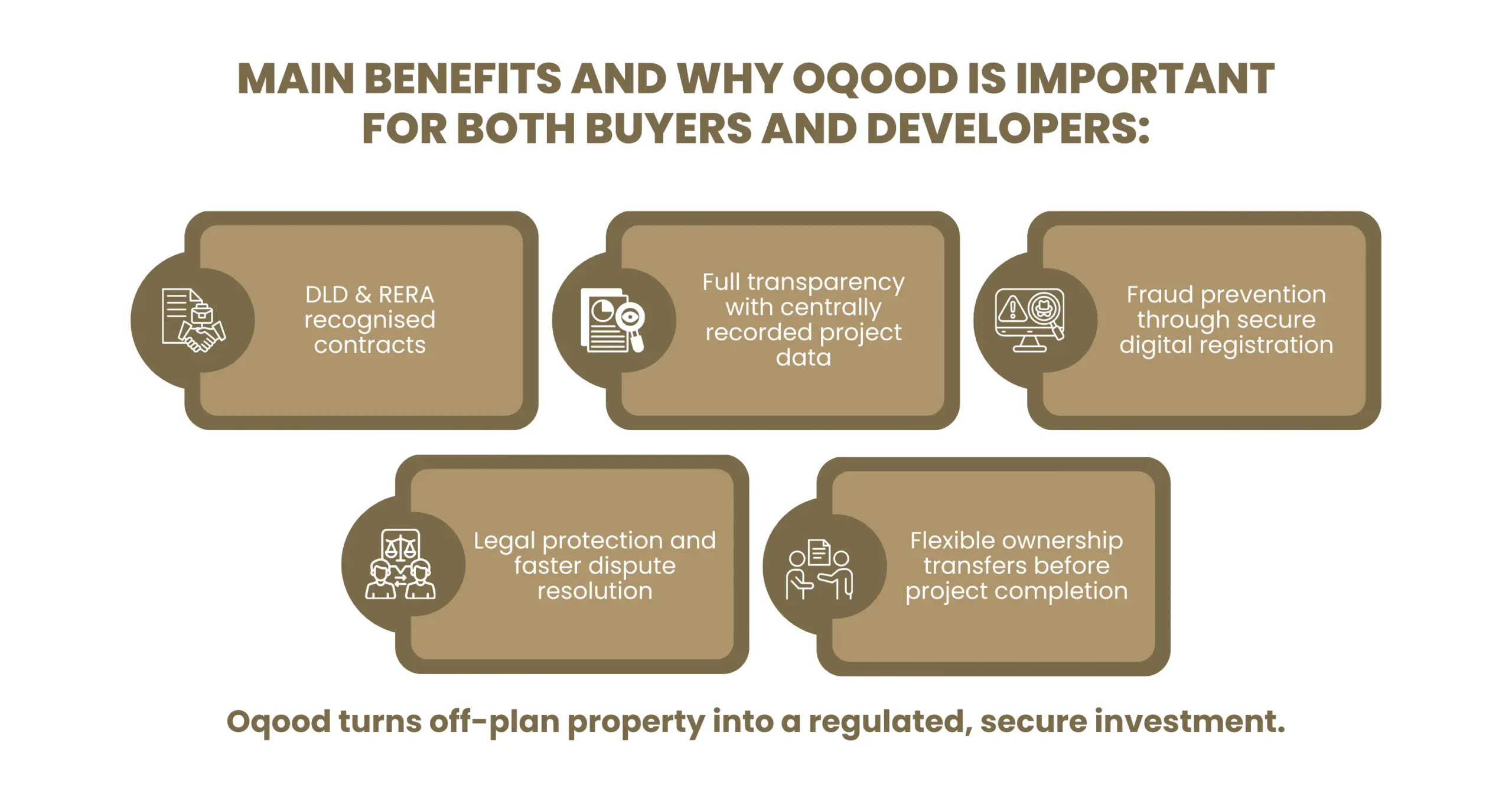
Off-plan property markets brought great opportunities in Dubai, but involved project delays, double-selling, and unregulated transactions. To address risks, the Dubai Land Department introduced the Oqood system back in 2007. Now, Oqood certificates provide security, transparency, and confidence. Here are the main benefits and why Oqood is important for both buyers and developers:
- Market Transparency: Centralised Oqood records allow buyers to track project updates, ensuring clear visibility throughout the construction phase.
- Legal Assurance for Buyers: Registered contracts are recognised by DLD and RERA, protecting buyers’ rights and ensuring all transactions follow Dubai property regulations.
- Fraud Prevention: Every sale is digitally documented, preventing duplicate or unregistered transactions. This provides legal recourse if conflicts arise.
- Ownership Flexibility: Buyers can transfer property before completion, and disputes are resolved faster thanks to digital contract storage.
- Ease for Developers: Developers can streamline sales, track progress, and ensure compliance efficiently through Oqood.
How to Get an Oqood Certificate & Register Off-Plan Properties in Dubai?
Here’ how the full process works, from project registration to digital certification:
Step 1: Developer Registers the Project
The developer submits the full project file to the Dubai Land Department, including layout plans, escrow account details, contractor information, and compliance approvals. DLD reviews and activates the project on the Oqood portal so units can be sold.
Step 2: Buyer Selects Unit and Signs the SPA
Buyers choose the unit, agree on terms, sign the SPA, and pay the initial deposit. The developer’s role is to prepare the contract and outline the payment schedule, handover timeline, and specifications.
Step 3: Developer Submits the Sale on the Oqood portal
After signing, the developer uploads your SPA, buyer information, property details, and payment record through the Oqood portal. The buyer’s role is to provide documents such as a passport, Emirates ID, and the signed contract.
Step 4: Buyer Pays Registration Fees
During submission, buyers settle the required charges. This includes the standard 4% registration fee and minor admin fees. Once paid, the Dubai Land Department reviews the file and verifies the documents. This is done through the Developer.
Step 5: Digital Oqood Certificate Issued
After approval, the Oqood certificate is delivered digitally by email or shared link. It includes unit details, buyer information, payment progress, developer name, and the official reference confirming your legal standing during construction.
After receiving the certificate, ownership can be reassigned through the system with developer and DLD approval. The final title deed is issued once construction finishes, the building is handed over, and completion is confirmed.
Cost of Oqood Registration in Dubai
Understanding the Oqood certificate fee is essential for off-plan buyers, as it ensures legal recognition of the sale and protects your investment. Registration charges cover multiple components, making budgeting important.
| Тип сбора | Сумма |
| Registration Fee | 4% of the property’s value |
| Administrative Charges | AED 250 – AED 500 |
| Knowledge Fee | AED 10 – AED 20 per transaction |
| DLD Service Fee | AED 1,040 per certificate (usually paid by developer) |
What is the difference between an Oqood and a title deed?
Oqood records an off-plan contract during construction, while a title deed confirms full ownership after the property is completed and handed over. Each document serves a different stage of your purchase. For full clarity on post-handover ownership, you can read our detailed guide on title deeds in Dubai.
| Feature | Oqood Certificate | свидетельство о праве собственности (Title Deed) |
| Property Stage | Off-plan, under construction | Completed unit |
| Legal Status | Temporary record | Final ownership proof |
| Purpose | Secure rights during build | Sell, rent, mortgage |
| Validity | Until handover | Permanent |
| Issued By | DLD through the Oqood portal | DLD via the trustee’s office or the developer |
Conclusion
Overall, the Oqood certificate for off-plan properties is the legal record that confirms your ownership and protects your investment during construction. It provides transparency, legal security, and verified proof of purchase before the final title deed. Common issues like documentation errors or developer delays can be avoided with expert support. At Lex Estates, our advisors, legal specialists, and tax professionals handle every step, from contract review to Oqood registration, so your off-plan investment in Dubai is fully protected and compliant. Contact us today for guidance.
Вопросы и ответы
How can I check my Oqood registration online?
Check your Oqood status through the Dubai Land Department’s website or app using your property or transaction details.
How long does it take to receive the Oqood Certificate?
Oqood certificates are issued within days after completing the required payments and submitting the necessary documents.
Can I sell my off-plan property using Oqood?
Yes, you can sell legally with Oqood, the developer’s NOC, payment compliance, and DLD transfer process.
What are my rights if I want to cancel a contract?
Refunds depend on construction progress and RERA rules; partial or full refunds may apply.
When can I convert Oqood to a title deed?
The title deed is issued only after project completion, full payment, the developer’s NOC, and DLD registration.