The Dubai real estate property values have risen by up to 8% in recent years, giving opportunities to foreign investors to make a fortune. Freehold ownership, strong capital appreciation, and a fully tax-free environment.
However, can foreign nationals own property in Dubai? Yes, they can buy property as Dubai doesn’t require UAE residency to purchase a property. You can buy a property from anywhere in the world in Dubai with full ownership rights and the facilities that a regular Dubai resident gets. Let’s learn how to buy a property in Dubai as a foreigner, navigating all the legalities and following the rules.
Can Foreign Nationals Own Property In Dubai?
Yes, foreign nationals can purchase property in Dubai, but only in specific freehold areas. Buyers get full ownership of both the land and the building without having a UAE visa. Dubai has made the property laws friendly to foreign investors to give them equal opportunities just like Dubai residents. When the foreign investor owns a property in Dubai, it can also help them get residency in the country later on.
Eligibility Criteria for Property Ownership
There are strict criteria to buy a property in Dubai for foreign nationals.
- Must follow Dubai property laws and guidelines
- Property must be in designated freehold areas as per Article 3 of Regulation No. 3, 2006
- Can apply for a mortgage from UAE banks
- Mortgage terms depend on income and residency status (UAE resident or overseas)
- No age restriction to buy property
Rules For Buying A Property In Dubai As A Foreigner
As a foreigner in Dubai, you cannot buy property throughout cit, except in the areas where the freehold and leasehold properties are available. In these areas, you can get land with full property ownership and long-term usage rights. If you’re an overseas investor, you can purchase the property remotely by making a deal with the seller.
Furthermore, you can also apply for a mortgage in Dubai as a foreigner. Remember, for foreign investors, there are higher down payments, and the rules may change depending on the area where you’re buying the property.
Legal Requirements and Documentation
These are the legal requirements and the documentation to buy a property in Dubai as an expat that you need to complete.
- Draw up a clear contract between buyer and seller outlining all terms.
- Sign the Real Estate Sale Agreement with the seller and witness, paying a 10% security deposit.
- Ensure the seller obtains a No Objection Certificate (NOC) from the developer and clears all dues.
- Complete the transfer of ownership at the DLD to receive the new title deed in the buyer’s name.
Property Ownership Options for Expats in the UAE
As an expat, you get two major property ownership options in the UAE, including leasehold and freehold property ownership.
Leasehold Property Ownership
In the UAE, leasehold ownership gives expats the right to use a property for a set time, often up to 99 years, as written in the contract. Buyers can live in, rent out, or benefit from the unit during this period. The land itself stays with the original owner or the government. This type suits people who do not need permanent ownership and want lower costs or access to areas not open for freehold.
Freehold Property Ownership
Expats in the UAE can buy freehold property and own both the building and the land forever. This gives full control to sell, rent, mortgage, or pass it to heirs. Freehold is allowed only in special designated zones approved by each emirate.
Rules and available areas differ across Dubai, Abu Dhabi, and other places. It offers the strongest security and long-term investment value for foreigners who want complete ownership without time limits.
Tax Considerations for Foreign Property Buyers in the UAE
The UAE has no property purchase tax, so buyers pay nothing extra at the time of buying. There is also no local tax on rental income from UAE properties. This makes it attractive for foreigners. However, foreign buyers must check their home country’s tax rules. Many countries tax worldwide income, including rent from UAE properties.
US citizens, for example, must report all overseas earnings to the IRS. Tax laws differ by nationality, so talking to a tax advisor in your home country is very important to stay compliant and avoid surprises.
You might be interested to learn about the taxes applicable to the sale of property in Dubai. Read this guide to find out what you need to know
Step-by-Step Guide to Buying Property in Dubai as a Foreigner
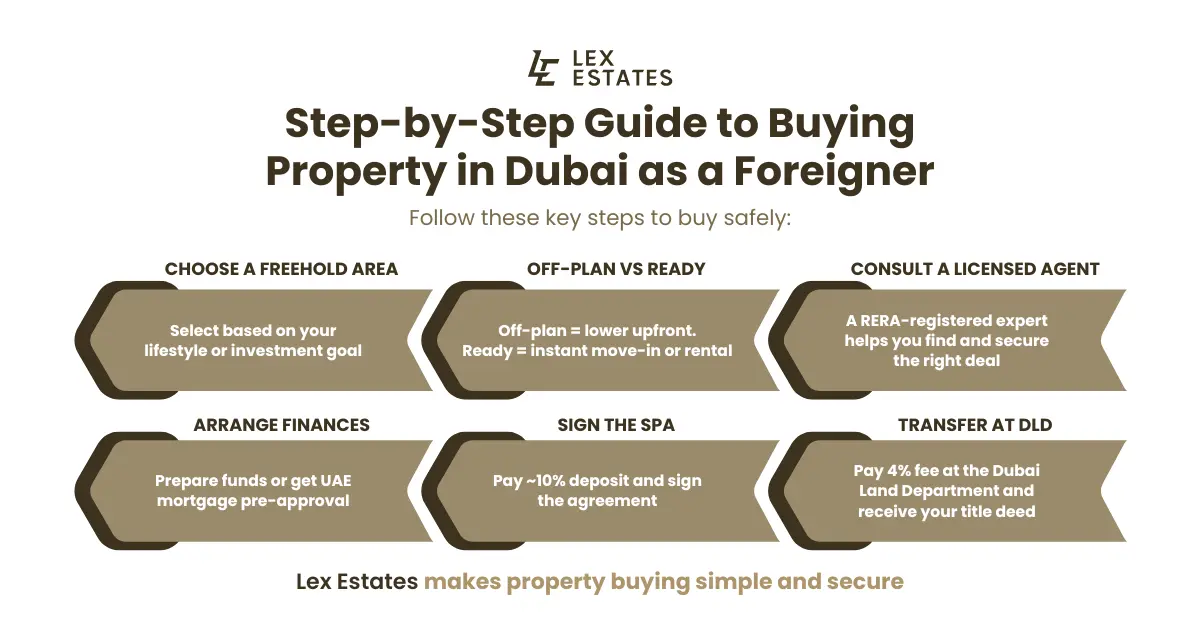
Follow this guide to buy a property in Dubai as an expat.
Choose a Freehold Area
First, decide if you want the property for personal living or for investment and rental income. Then pick a freehold area that matches your goal, such as Dubai Marina for beach life or Downtown for city views. Look at location amenities like schools, malls and transport, plus future demand for good value growth.
Decide Between Off-Plan or Ready Property
Off-plan properties cost less at the start with flexible payment plans over months or years, but you have to wait for completion. Ready properties let you move in right away or start renting immediately for instant income. Choose based on your timeline, budget, and whether you want potential price growth or quick use.
Consult a Real Estate Agent
A good real estate agent knows current market prices, neighbourhoods, and upcoming projects. They guide you through options, save time and handle paperwork to reduce stress. Agents also negotiate better deals and make sure everything follows the rules. Find a licensed agent registered with RERA for trust and safety.
Get Your Finances in Order
Make sure you have the full funds ready or get pre-approval for a mortgage from a UAE bank. Many banks offer loans to foreigners with a good salary and documents. This step lets you know your exact budget and shows sellers you are serious.
Negotiate and Sign the Purchase Agreement
Once you pick a property, your agent negotiates the price and terms for you. You pay a deposit, usually 10% to reserve it. Then, sign the purchase agreement called the Sales and Purchase Agreement.
Complete the Transfer at DLD
The final step happens at the Dubai Land Department office or through a trustee office. You pay the transfer fee, 4% of the sale price, plus other small costs. After checks, the title deed is issued in your name. This gives you full ownership, and you get the keys on handover day.
You might be interested to learn about how foreigners can buy property in Dubai. Read this guide to find out what the process involves.
Buy Property In Dubai With Lex Estates
Can foreign nationals own property in Dubai? Yes, they can, as Dubai property rules are made to be friendly for foreign investors. As a foreigner, you can buy a leasehold or freehold property in Dubai with full ownership and rights.
When you buy, make sure that you work with a reputable real estate agency which helps you navigate all the legal requirements of buying a property in Dubai. Let Lex Estates be your real estate agent in this journey and ensure you get an affordable, profitable property in a prime location in Dubai faster and by following all the legal aspects. Contact us today.
FAQS
Can I buy a property in Dubai without being a resident?
Yes, even when you’re not a Dubai resident, you can still buy a property there with full ownership and long-term rights in the approved areas.
When did Dubai allow foreigners to buy property?
Dubai allowed foreigners to buy property back in 2002 with Law No.7, which created special zones where non-UAE nationals could buy land and buildings outright.
How long can you stay in Dubai if you own a property?
Owning a property in Dubai doesn’t make you a full-time resident there. You still need to have a visa, such as a tourist visa, for living 30 or 90 days. If you want to stay longer, you need to have an investor or a golden visa.