Probate in the UAE is the legal process of validating a deceased person’s will, identifying their assets, settling outstanding debts, and distributing the remaining estate to beneficiaries. After a person dies in the UAE, assets such as bank accounts, property, and investments are typically frozen until a court issues a probate or succession order.
This process ensures that the estate is handled legally and fairly under UAE laws. If you are an expatriate in the UAE and are planning to register your Will, understanding probate, its importance, and how it works in the UAE can help you simplify your will registration process. Let’s understand “what is probate and how does it work in the UAE?”
Want to know about Inheritance & Wills in Dubai Real Estate: Protecting Your Assets? Read our Blog related to it.
What Is Probate in the UAE?
Probate is a court-supervised legal procedure that takes place after a person’s death. It involves confirming the validity of a will (if one exists), identifying heirs, paying debts, and distributing assets according to applicable laws.
В ОАЭ, probate applies to both Muslims and non-Muslims. However, inheritance rules differ depending on religion, whether a will exists, and the jurisdiction handling the case.
Without probate, family members cannot:
- Access bank accounts
- Transfer property ownership
- Sell assets
- Manage business interests
This is because UAE authorities freeze all assets until legal approval is granted.
Key Aspects of Probate Process in the UAE
Some key features of probate in the UAE include:
- Court-supervised legal process
- Freezing of assets upon death
- Appointment of executor or administrator
- Settlement of debts and liabilities
- Distribution of assets to beneficiaries
- Different rules for Muslims and non-Muslims
These features ensure transparency and fairness throughout the probate process.
The Probate Process in the UAE
Probate is the way to protect your assets and distribute them according to your Will if you have registered it in the UAE. This is how probate works in the UAE.
Step 1: Obtain Death Certificate
The first step is obtaining an official death certificate from the UAE authorities. This document is required to initiate probate proceedings and notify relevant institutions such as banks, property authorities, and government departments. Without a death certificate, probate applications cannot proceed, making it an essential starting point.
Step 2: Locate the Will
Next, determine whether the deceased left a registered will. This may be stored with courts, legal advisors, or will registries. A will simplifies probate and clarifies asset distribution. If no will exists, the court follows UAE inheritance laws, which may differ from the deceased’s intended distribution.
Step 3: File Probate Application
The executor or family member files a probate application with the appropriate court. This includes submitting documents such as death certificates, identification records, and asset details. The court reviews the application and confirms whether additional documentation or legal verification is required before proceeding.
Step 4: Court Verification
The court verifies the will, confirms legal heirs, and reviews submitted documents. If necessary, the court may request additional evidence or appoint an administrator. This step ensures that all legal requirements are met and that inheritance is distributed according to UAE laws.
Step 5: Asset Distribution
Once the court issues probate approval, assets are released and distributed to beneficiaries. The executor settles outstanding debts, transfers ownership, and completes estate administration. This final step ensures the legal transfer of property, finances, and other assets to rightful heirs.
Probate Process for Muslims and Non-Muslims
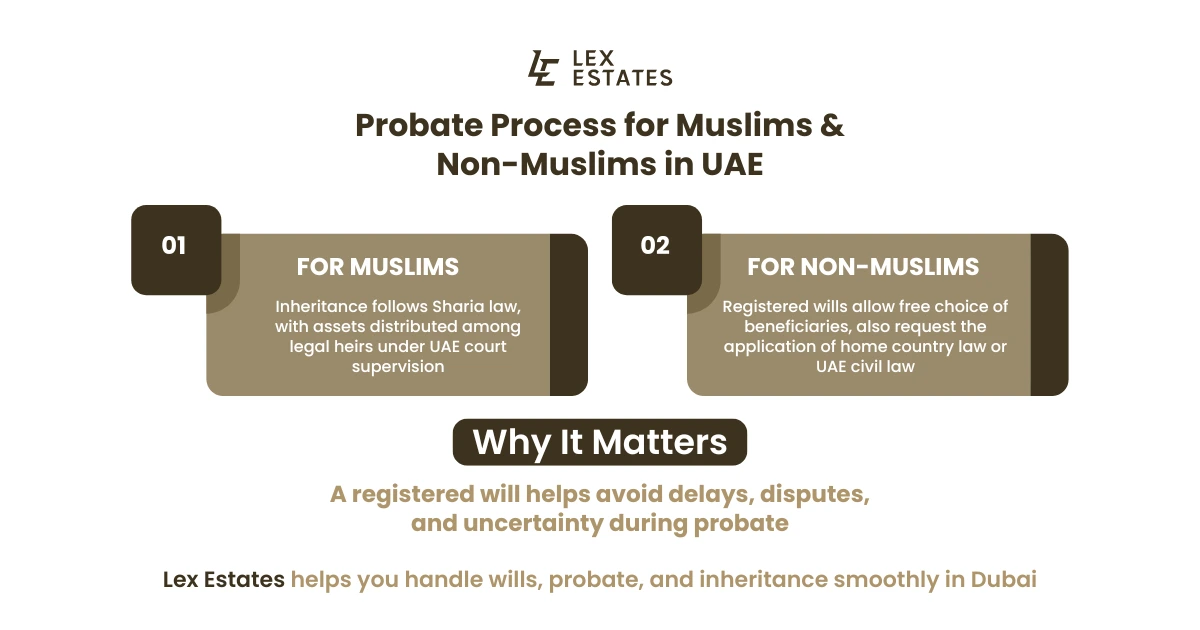
Inheritance rules in the UAE differ for Muslims and non-Muslims. These differences affect how assets are distributed and whether wills are applied. Understanding these distinctions is essential for ensuring probate follows appropriate legal frameworks and respects inheritance rights.
Probate for Muslims
For Muslims, inheritance is governed by Sharia law. Assets are distributed according to fixed shares among eligible heirs such as spouses, children, and parents. Courts determine distribution based on Islamic principles, even if a will exists, ensuring legal compliance with UAE inheritance regulations.
Probate for Non-Muslims
Non-Muslims can register wills and choose beneficiaries freely. They may request the application of their home country’s laws or UAE civil law. Having a registered will simplifies probate and helps ensure assets are distributed according to personal wishes.
Legal Steps in the Probate Process in the UAE
The probate process in the UAE follows a structured legal framework to ensure the deceased’s estate is administered properly. Courts oversee each stage to verify documents, identify heirs, and authorize asset distribution. The main legal steps involved in the probate process include:
- Filing the Probate Application
The executor or a family member submits a probate application to the relevant UAE court. This includes providing essential documents such as the death certificate, identification documents, and asset details. The court reviews the application before initiating the probate process. - Verification of Legal Heirs
The court identifies and confirms all legal heirs. This may involve submitting family documents, marriage certificates, or birth certificates. The verification process ensures that inheritance is distributed according to UAE laws and prevents disputes among beneficiaries. - Appointment of Executor or Administrator
If a will exists, the named executor manages the estate. If no executor is appointed, the court designates an administrator. This individual is responsible for handling estate matters, settling debts, and distributing assets. - Issuance of Succession Certificate or Probate Order
Once verification is complete, the court issues a probate order or succession certificate. This document grants legal authority to access bank accounts, transfer property, and manage financial matters. - Asset Distribution to Beneficiaries
After receiving court approval, assets are distributed according to the will or applicable laws. Debts and liabilities are settled first, followed by the transfer of remaining assets to rightful beneficiaries.
How Long Does Probate Take in the UAE
The timeline for probate in the UAE varies depending on several factors, including the presence of a will, asset complexity, and potential disputes among heirs. The process may take a few weeks or several months, depending on the circumstances.
- With a Registered Will
Probate cases with a registered will are typically faster. If documents are complete and no disputes arise, the process usually takes 1 to 4 months. Clear instructions will help simplify estate administration. - Without a Will
When no will exists, the court must determine legal heirs and asset distribution. This can extend the timeline to 6 to 12 months or longer, especially if multiple heirs are involved. - Factors That May Cause Delays
- Missing or incomplete documents
- Disputes among beneficiaries
- Assets located in multiple jurisdictions
- Heirs residing outside the UAE
- Complex ownership structures
Proper estate planning and accurate documentation can significantly reduce probate timelines.
Documents Required for Probate in the UAE
To initiate probate in the UAE, certain documents must be submitted to the court. These documents help verify the deceased’s identity, confirm heirs, and identify assets. The exact requirements may vary depending on the case.
Common documents include:
- Death certificate issued by the UAE authorities
- Passport copies of the deceased and heirs
- Emirates ID (if applicable)
- Registered will (if available)
- Marriage certificate (if applicable)
- Birth certificates of children
- Property ownership documents
- Bank account details and statements
- Business ownership documents (if applicable)
Additional documents may be required depending on asset types, jurisdiction, and legal circumstances. Preparing these documents in advance can help avoid delays and ensure a smoother probate process.
Lex Estates: Get Professional Probate Assistance in the UAE
After understanding what probate is and how it works in the UAE, the process feels a bit overwhelming. Managing probate in the UAE can be complex, especially when property assets are involved. Lex Estates offers professional support for buying and selling real estate across the UAE. If you need probate or legal assistance, we connect our clients with trusted professionals and relevant authorities. Our goal is to simplify property transactions and ensure you receive the right guidance and support for a smooth and efficient experience. Call us today.
Read out our recent blog, What Happens If a Property Owner Dies in Dubai?
Часто задаваемые вопросы
What happens if someone dies without a will in the UAE?
If no will exists, UAE courts distribute assets according to applicable laws. This may involve Sharia principles or civil laws, depending on the individual’s status.
Are bank accounts frozen after death in the UAE?
Yes, banks typically freeze accounts until probate approval is issued.
Do expatriates need probate in the UAE?
Yes, expatriates must complete probate for UAE-based assets.